Solidarity, Violence, Forgetting: The three periods of Lesbos
(2015—2025)
Mar.2025 Canon R6
The Greek island of Lesbos, located on the Eastern Mediterranean migration route, where more than 60% of the population descends from refugees, became the media spotlight during a massive migratory flow in 2015. That year marked the turning point in the debate on migration for the following decade, both on the Greek island and throughout the EU.
The project aims to honor the memory of those who have risked their lives at this border over the last ten years, using Lesbos as a gateway to Europe. Places and moments, historical and symbolic, were mapped in order to narrate a chronology of events in the greek island, but also throughout the evolution of migration policies from EU.
A collaboration with Humans Before Borders.
2015: The time of solidarity
In the second decade of this century, with the Arab Spring and the outbreak of civil war in Syria, crossings to the island began to increase. Their peak in 2015 led to a humanitarian crisis, the "long summer of migrations". That year, around 1.3 million asylum applications were made to the European Union – 40% of which arrived via Lesbos.
According to the UNHCR, more than 400,000 people passed through an island with a population of around 86,000. Greece, one of the countries most affected by the 2008 economic recession, gave in to new austerity measures that year. Even so, the solidarity in civilians’ efforts rescuing and welcoming migrants earned the residents of Skala Sikamineas a nomination for the Nobel Peace Prize.
That year, the European Migration Agenda was presented and implemented.
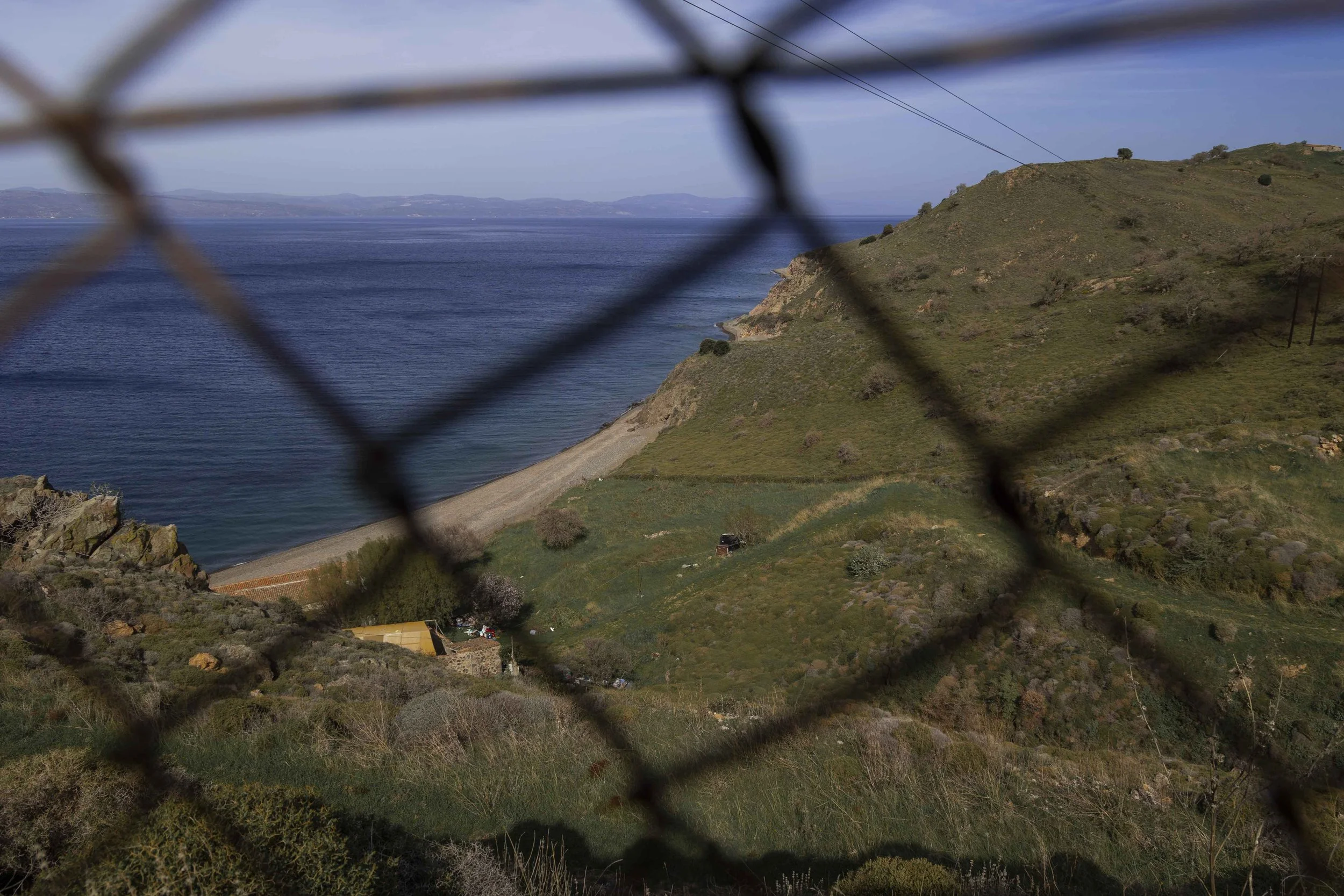
Efthalou beach and others on the north coast were the first to feel an influx change. The locals helped with emergencies, with their fishermen leading the rescue efforts. This solidarity earned the residents of Skala Sikamineas a nomination for the Nobel Peace Prize in 2016. Turkey, visible on the horizon, is only ten kilometers away at its closest point. In small, overcrowded inflatable boats, a journey that would take up to an hour and a half on a local ferry, can take over four hours.
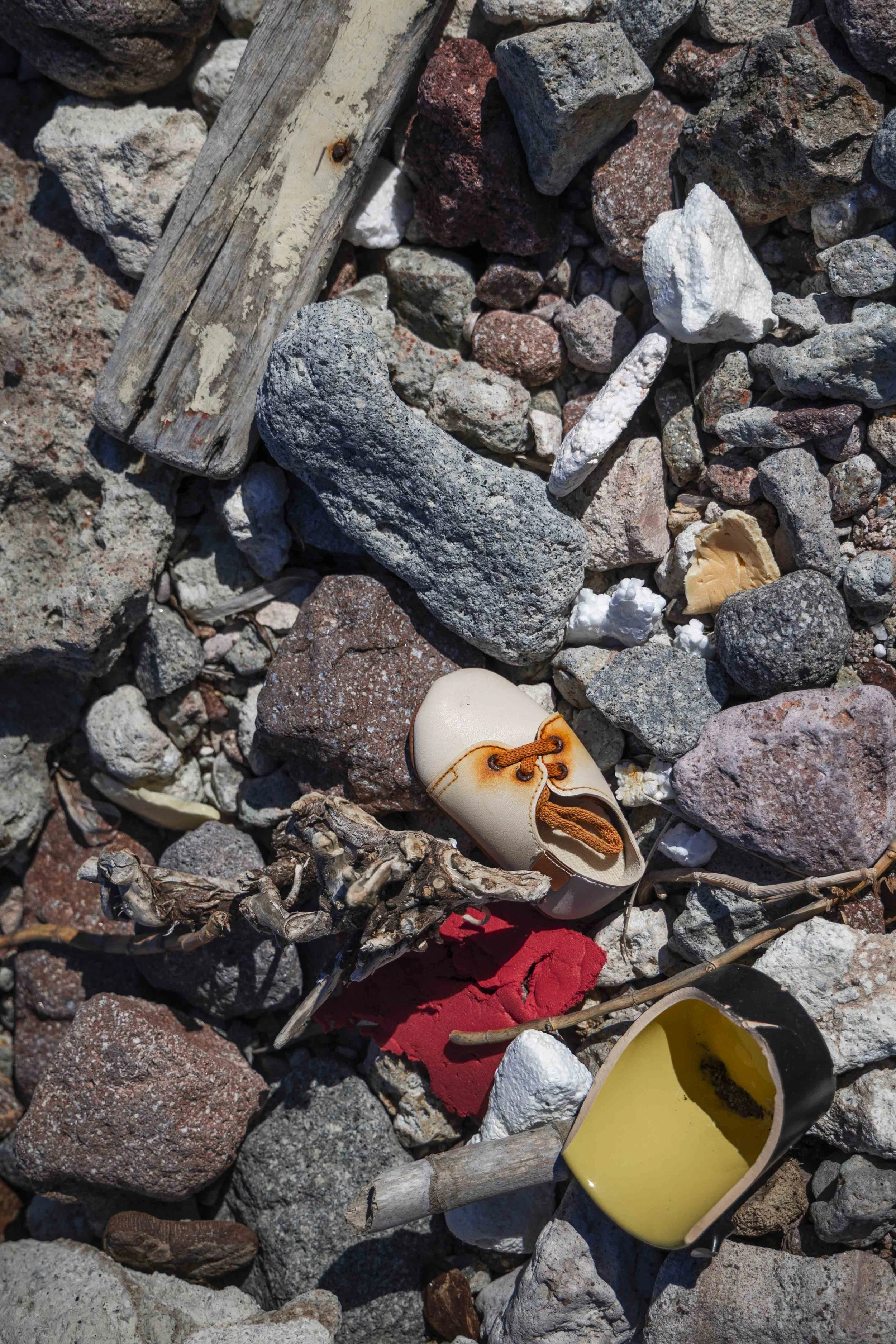
Thousands risked their lives on an unsafe crossing, in rubber boats nearly collapsing, often carrying almost three times the recommended capacity, with counterfeit or inadequate lifejackets to keep users afloat. In that year, around 3.692 migrants died on the Mediterranean, according to the IOM. Many bodies were never found.
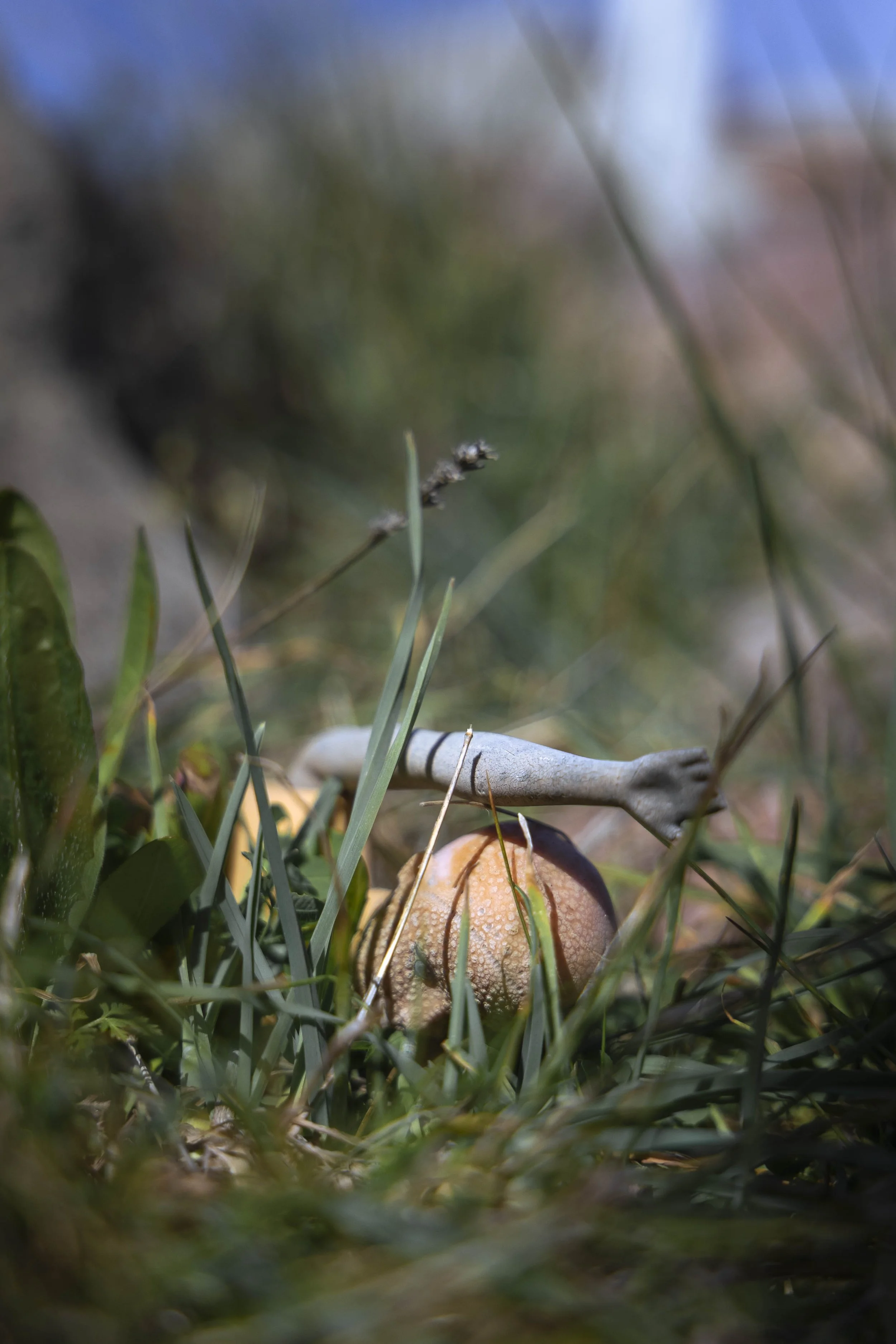
Lesbos records the highest proportion of families and women seeking asylum on the Mediterranean migration routes. Even in 2019, they continued to represent more than 60% of arrivals. We recall the words of the fisherman Stratis Valamios: “I dive once again and find a baby under the boat, it is dead. I lift it up and there’s another one underneath it. I try to get the two of them out and I see yet another one. There’s only so much one can take”.
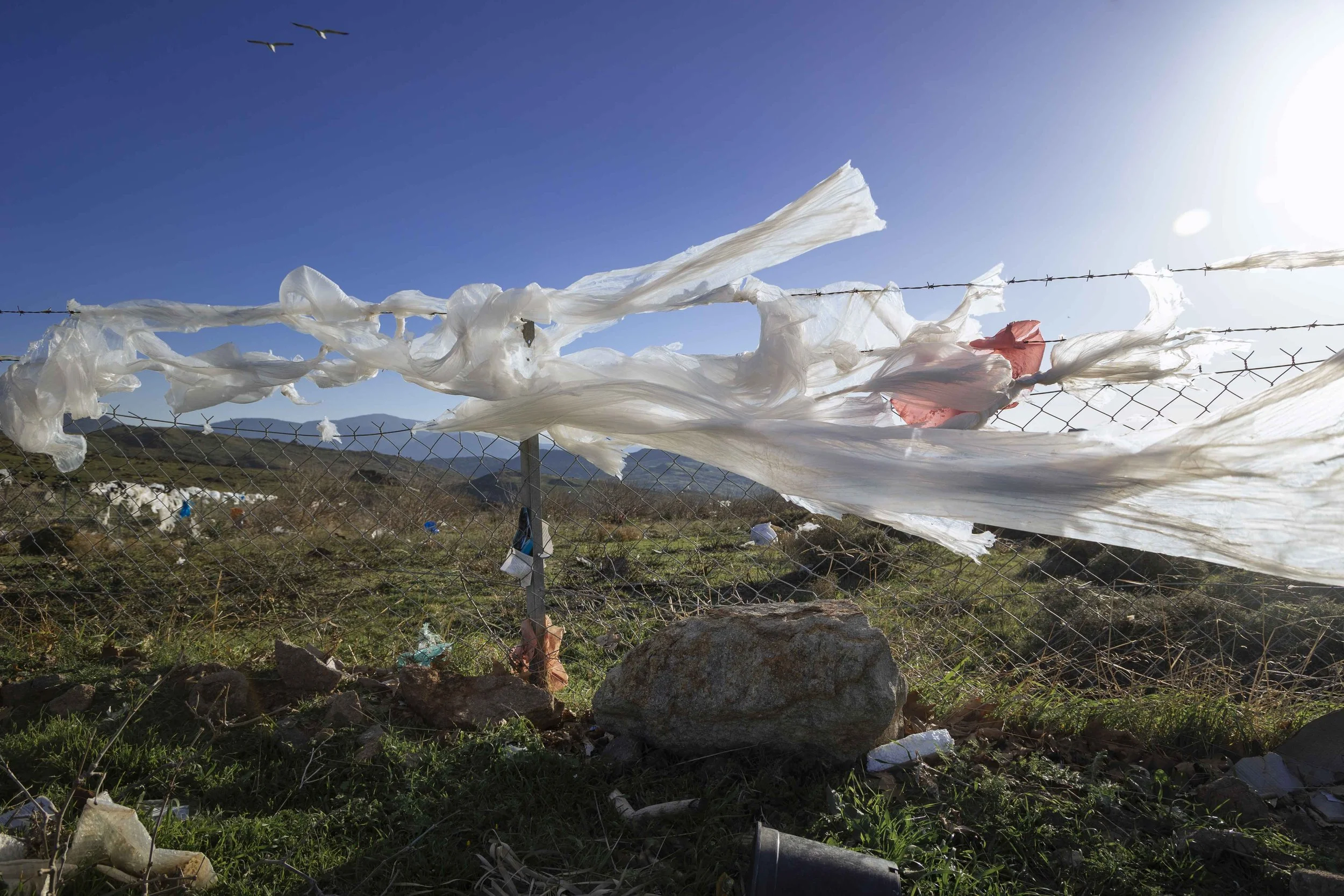
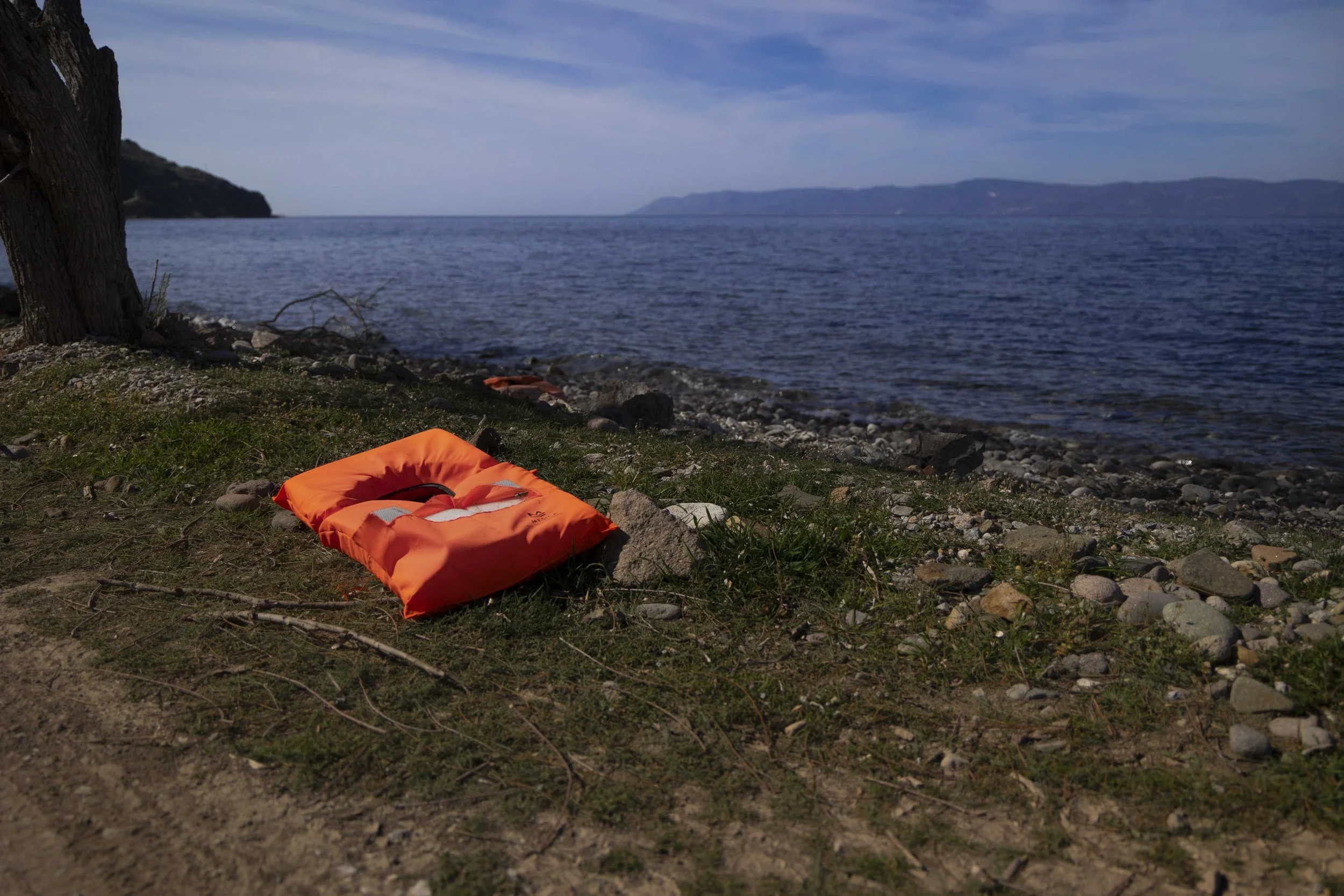
In 2015, there were days when more than 12.000 people completed the crossing, dumping their life jackets on the coast. In addition to their symbolic value, the accumulation of these objects also highlighted the environmental dimension of a human crisis, with an estimated 1.000 to 1.500 kilograms of material accumulating on the beaches during that period. In response, the so-called "Lifejacket Cemetery" was created, a landfill designed to collect the waste, serving also as a landmark for visitors. Although it is not clear what decision the municipality had taken, in 2021 the lifejackets would finally disappear.
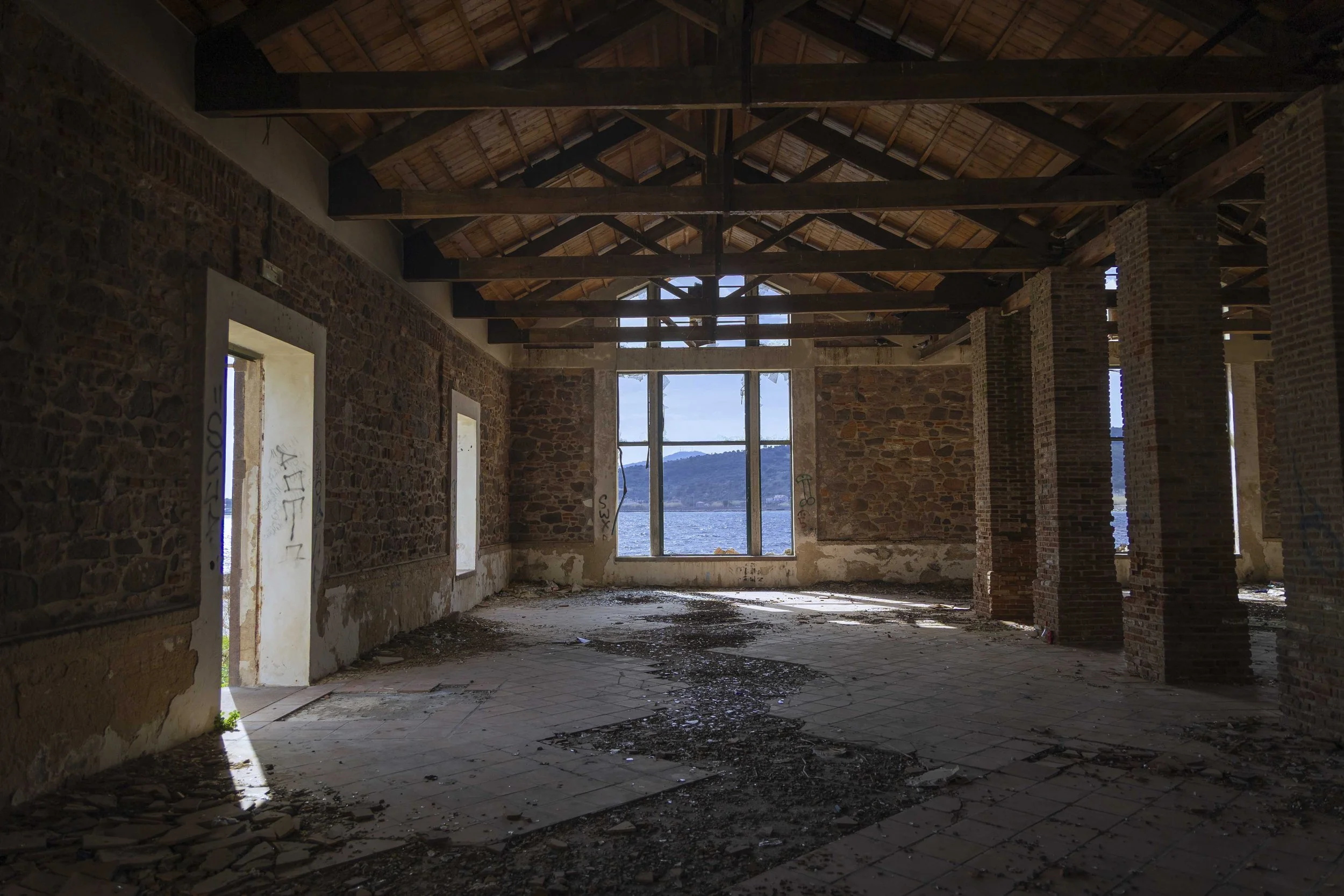
Privacy was a luxury hard to find in Moria, leading many to seek it outside the facility. In an abandoned building in Mytilene bay, messages, names, and hearts are scattered across the walls. Political activist and photographer Fayad Mulla called it "the lovers' place".
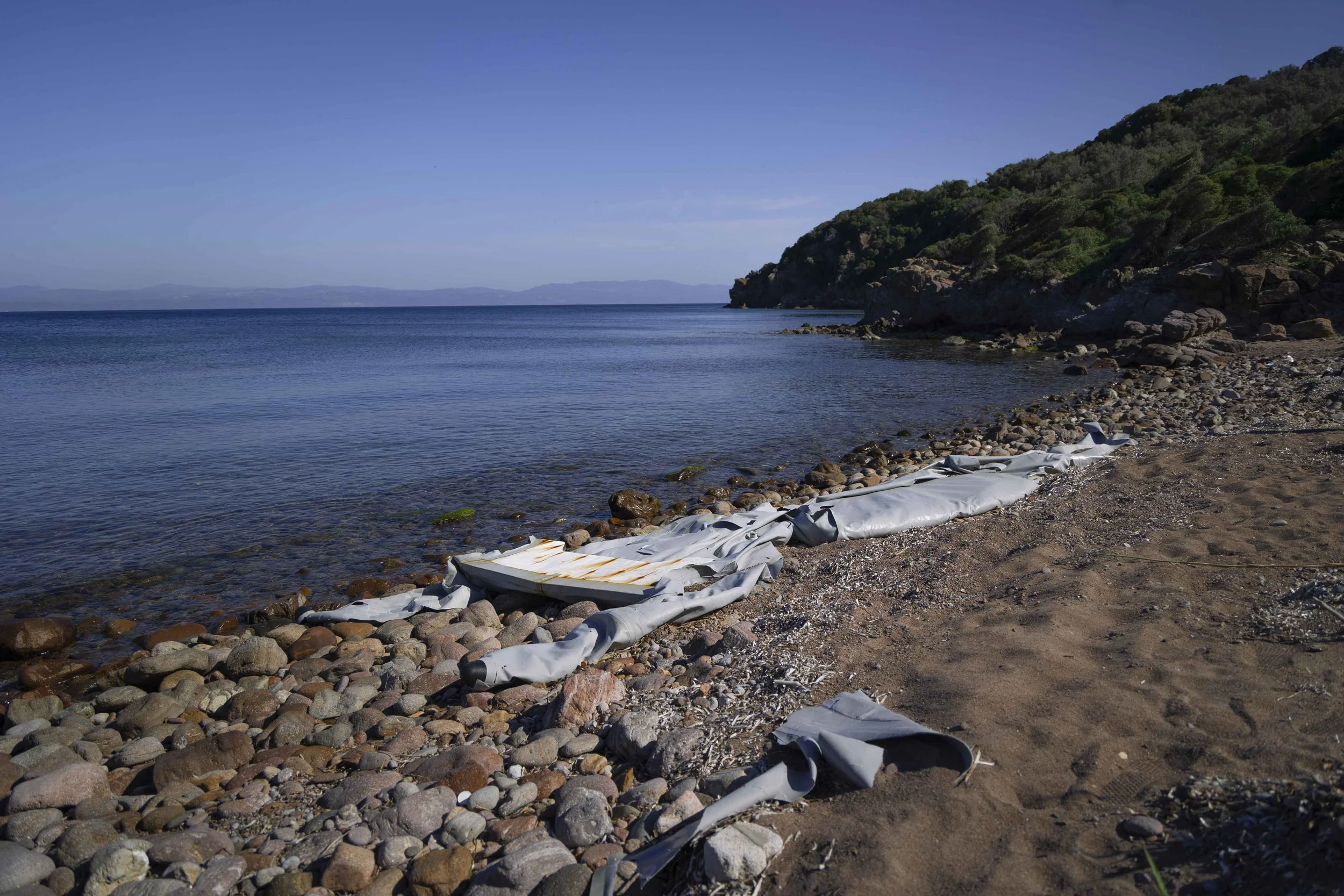
The last large group of boats reached Kagya beach in September 2019. "Seventeen boats, one after the other. We feared it would start again," a local humanitarian worker told us. That year, around 27.000 people completed the crossing. For those living close to the consequences of a "buffer effect" in the island's camps, the increase in arrivals was met with apprehension. After all, these people had not been the only ones trying to cross the border—107.901 were intercepted by the Turkish authorities.
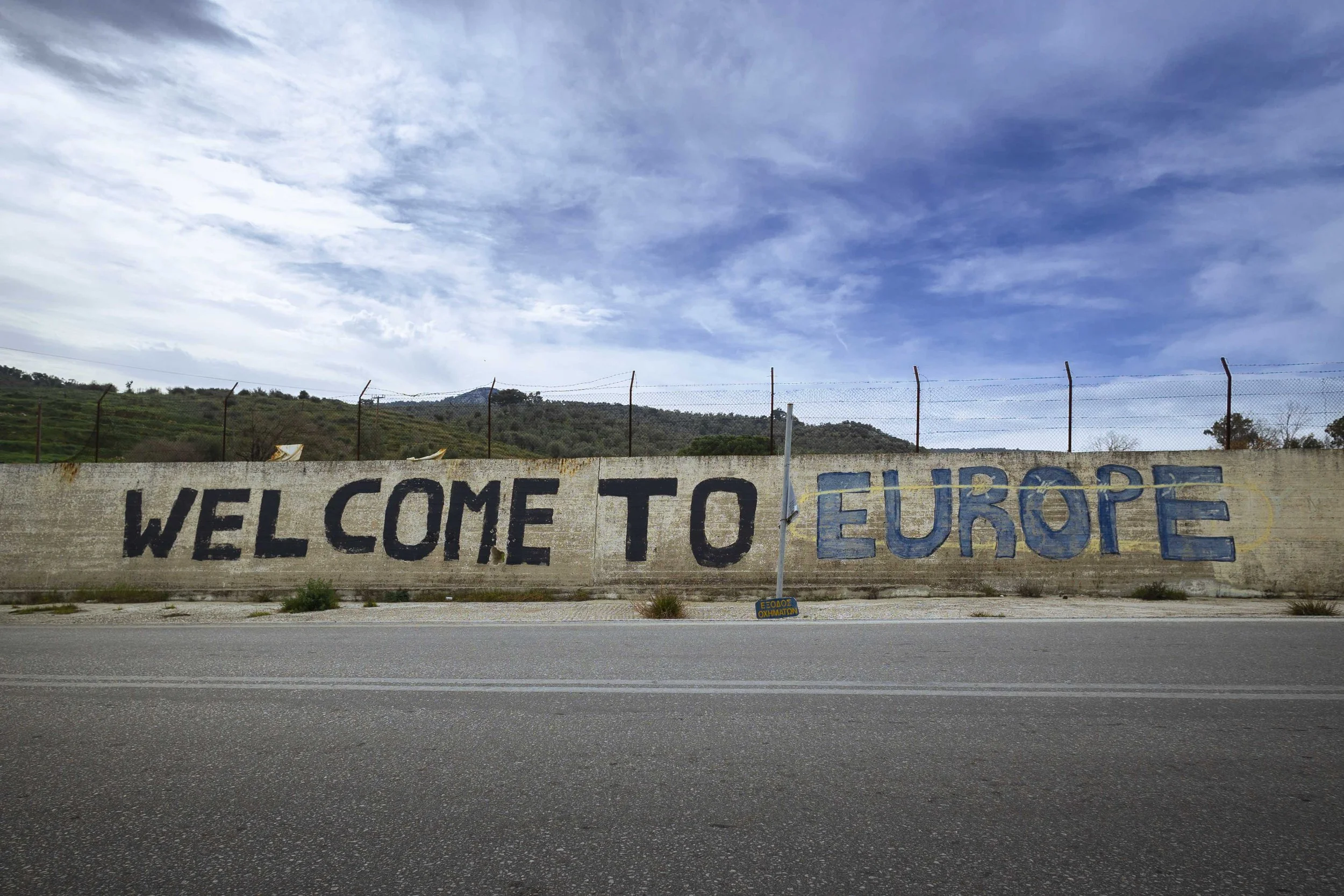
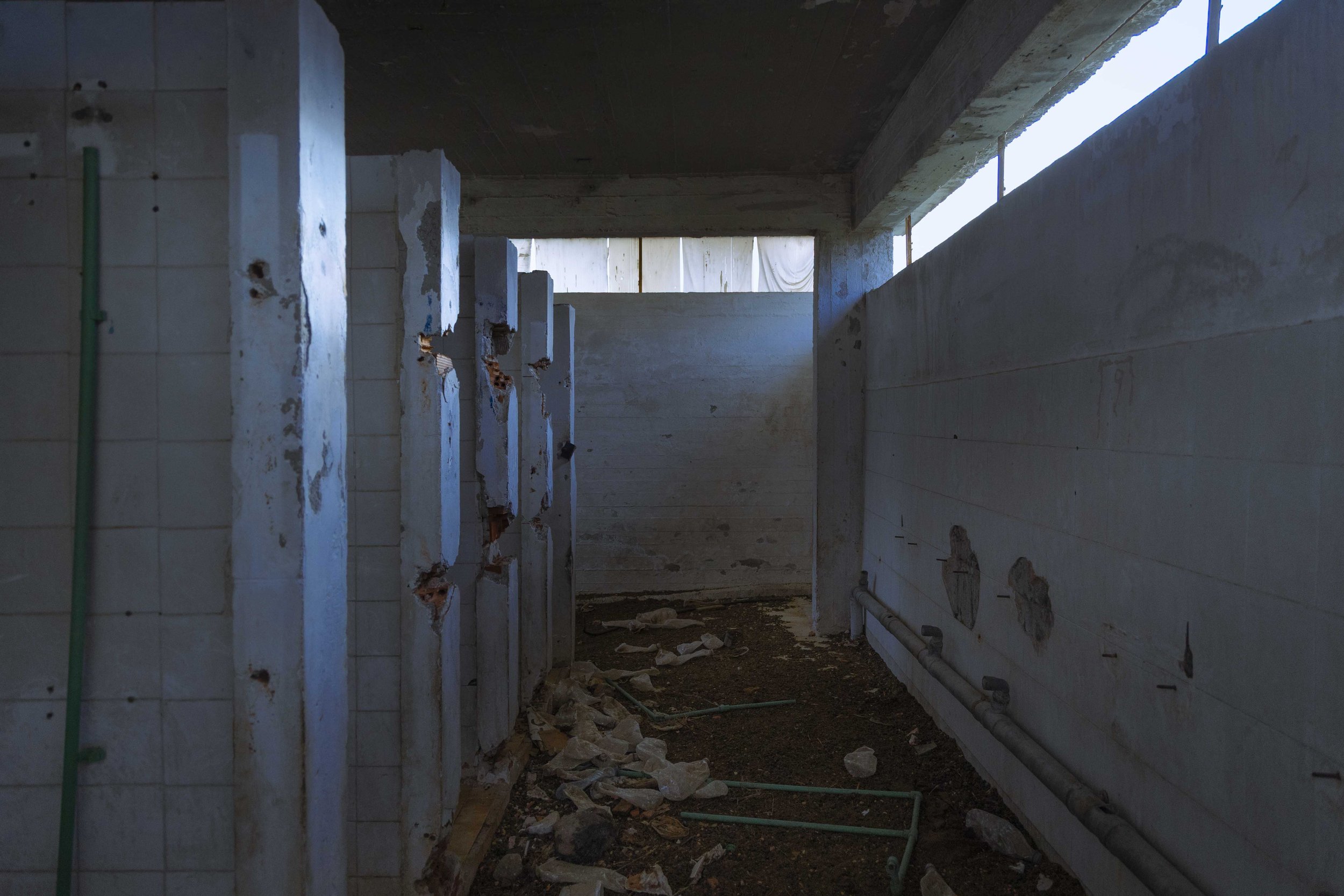
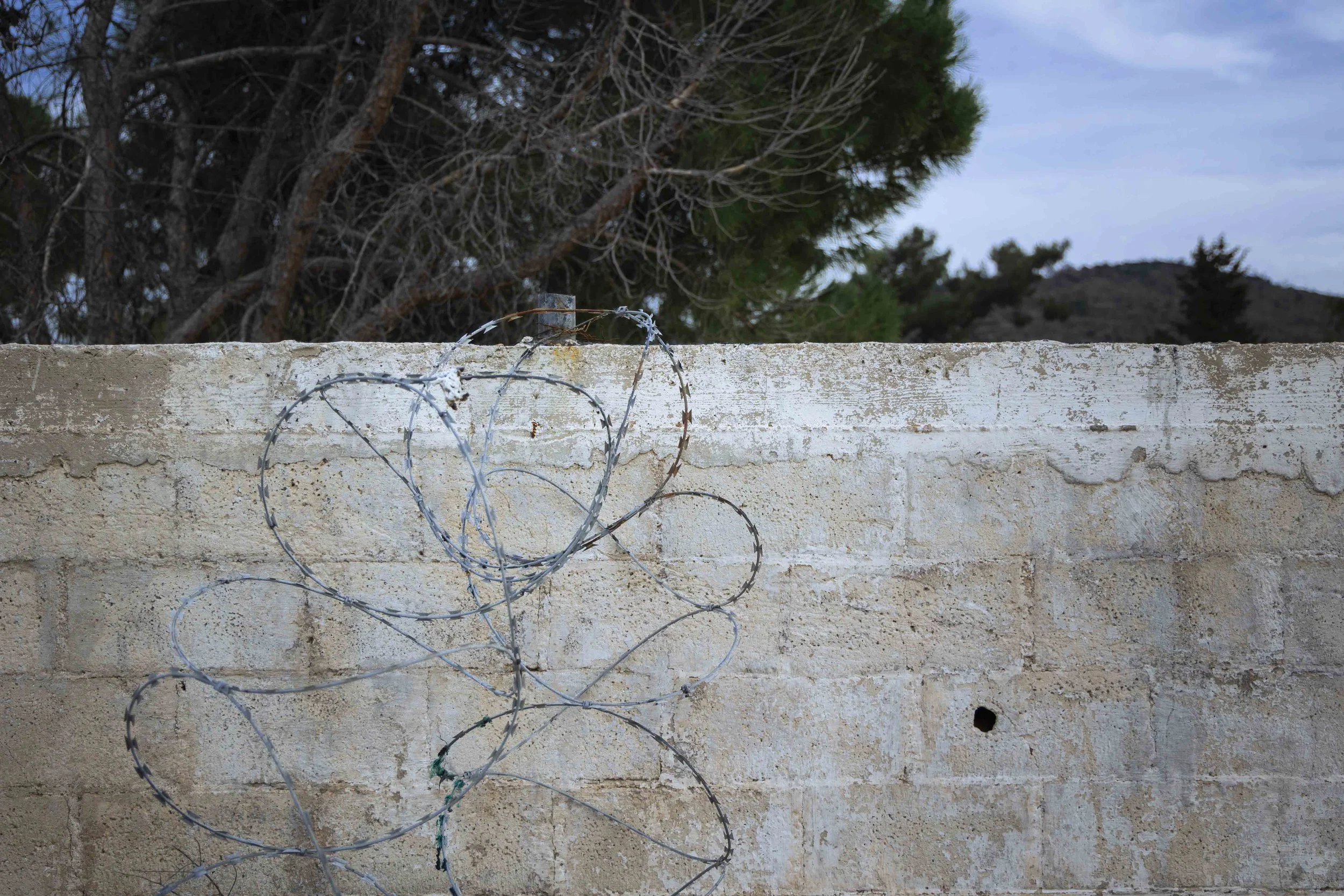
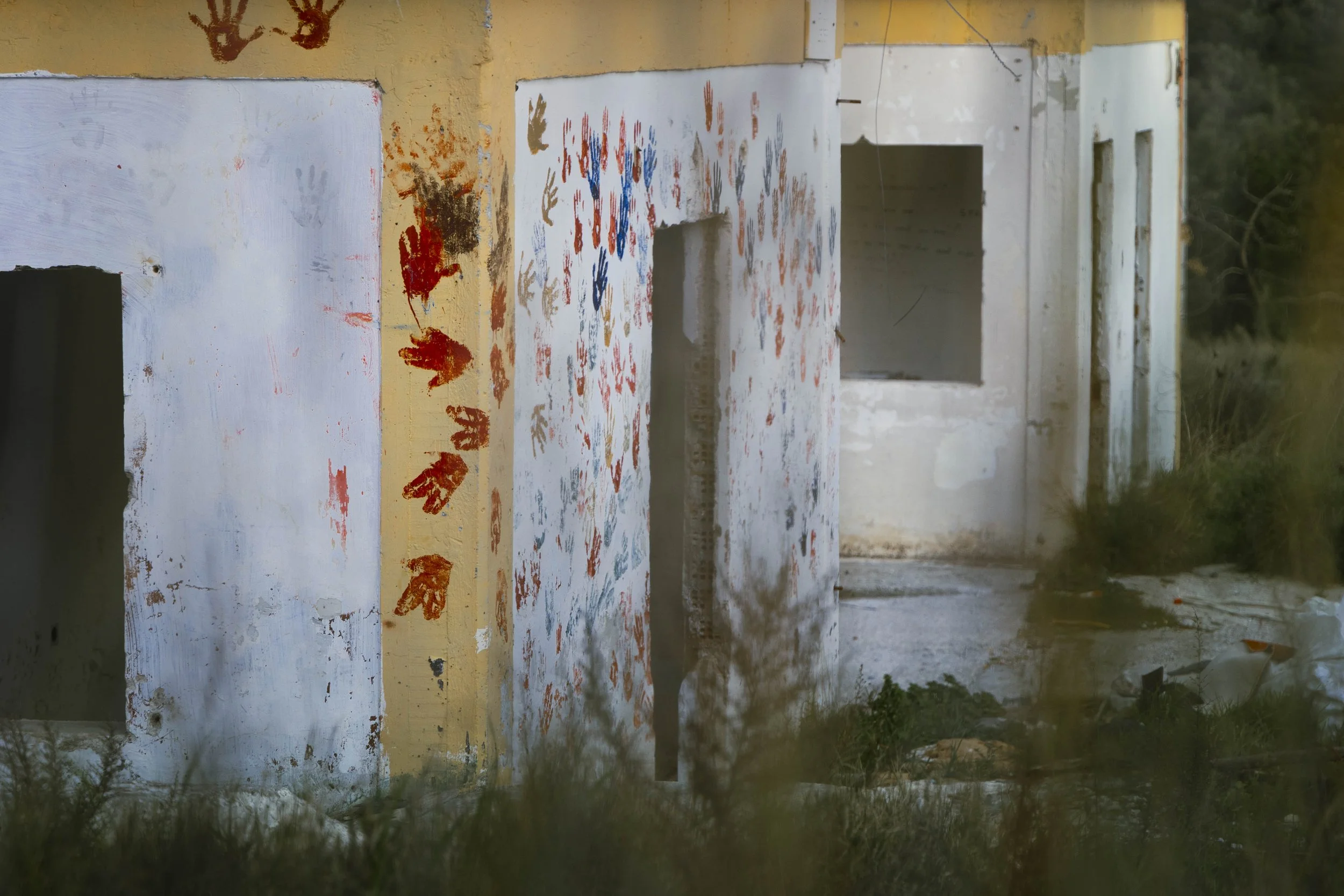
In 2016, the EU signed an agreement with Turkey that imposed a geographical restriction on asylum seekers. From then on, they were not allowed to leave the region while their cases were being processed, which often dragged on for years. As a result, the hotspot that would become known as the Moria camp, designed for only 2.840 people, was chronically overcrowded.
It lacked decent hygiene, health and safety conditions. In 2019, despite having around 19,000 inhabitants, it was estimated that there was one toilet for every 200 people. Only that year were the camp's sewers connected to the regional waste treatment plant.
2020: The time of violence
At the beginning of this year, around 19.000 people were forced to live in Moria hotspot, “Europe’s largest refugee camp”, due to the insufficient response from the Greek government and Member States and an increase in arrivals.
The feeling of abandonment was unanimous. In January, residents protested. In February, asylum seekers did the same – the weak reception from locals ended up triggering the tensions in Lesbos. This was followed by a period of intimidation and violence, perpetrated by residents and far-right groups against the migrant community, the media, activists, and humanitarian workers.
Simultaneously, the Covid-19 pandemic was gaining ground, reinforcing calls for the evacuation of the Moria camp. In September, a four-day fire would bring this long chapter to an end. The EU, under pressure to reinvent its immigration policies, presented the first version of the New Pact on Migration and Asylum.
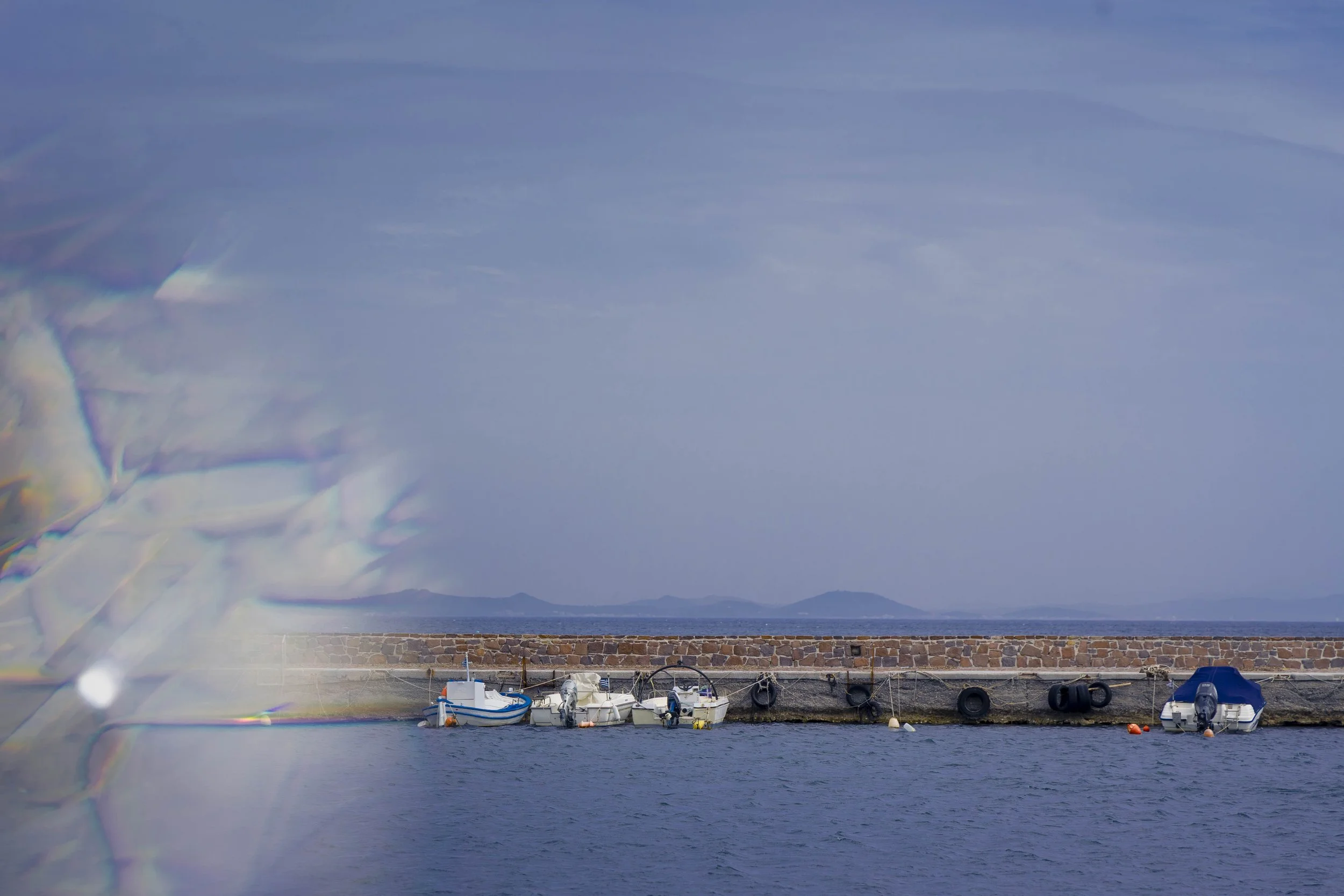
With tensions boiling over, the Port of Thermi was just one of the stages for the several attacks carried out by locals and far-right groups. Here, on March 1, 2020, photojournalist Michael Trammer was brutally assaulted while documenting a crowd of locals trying to prevent a boat of migrants from disembarking. On that boat was Kamaras, who was fleeing political torture in Sierra Leone, which had already cost him all the fingers of one hand. The four-hour crossing was followed by another 14 hours on a bus, prevented from reaching Moria due to roadblocks set up by residents.
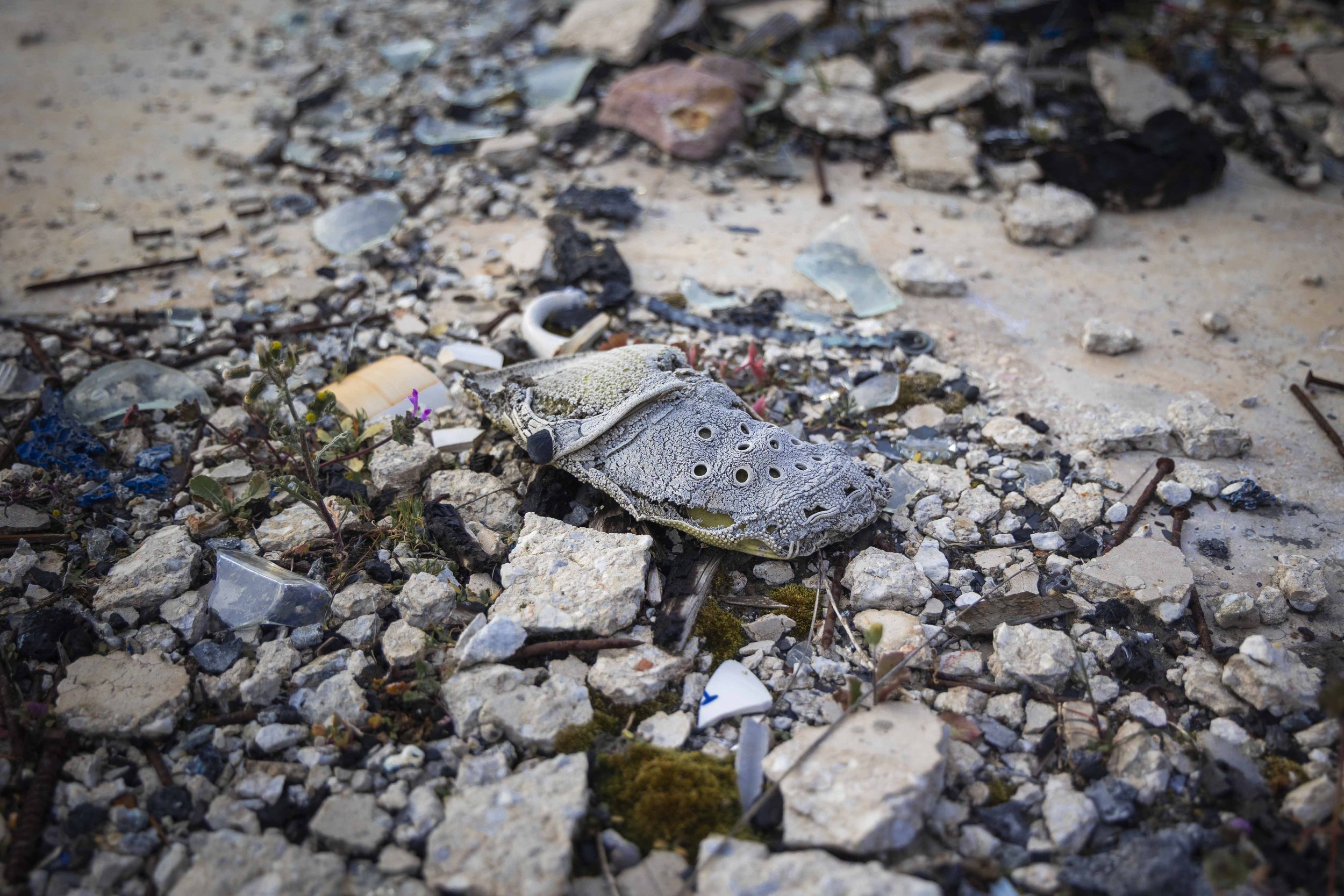
On September 8, 2020, after long months of forced confinement and with the appearance of the first cases of Covid-19, the entire Moria camp burned down, making international headlines. The incident did not necessarily come as a surprise – several fires had already been extinguished in the camp. The most recent ones claimed the life of a 6-year-old child, in march, and a mother and her child died, in september 2019. 2020 saw the last of the 247 fires that had burned since 2013. More than 12.000 people were displaced, without access to basic hygiene or health services, in an area blocked off by police and residents.
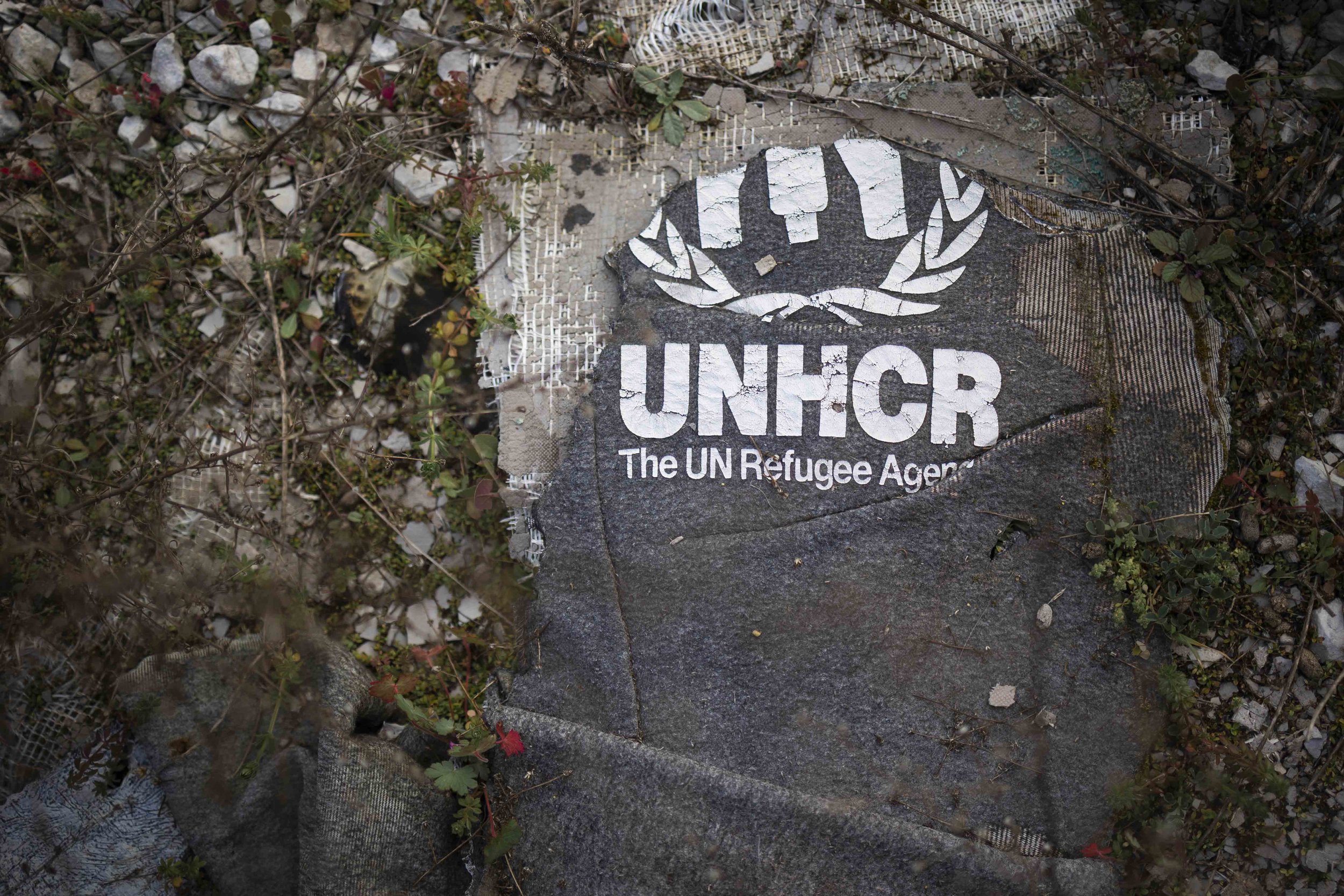
On September 8, 2020, after long months of forced confinement and with the appearance of the first cases of Covid-19, the entire Moria camp burned down, making international headlines. The incident did not necessarily come as a surprise – several fires had already been extinguished in the camp. The most recent ones claimed the life of a 6-year-old child, in march, and a mother and her child died, in september 2019. 2020 saw the last of the 247 fires that had burned since 2013. More than 12.000 people were displaced, without access to basic hygiene or health services, in an area blocked off by police and residents.
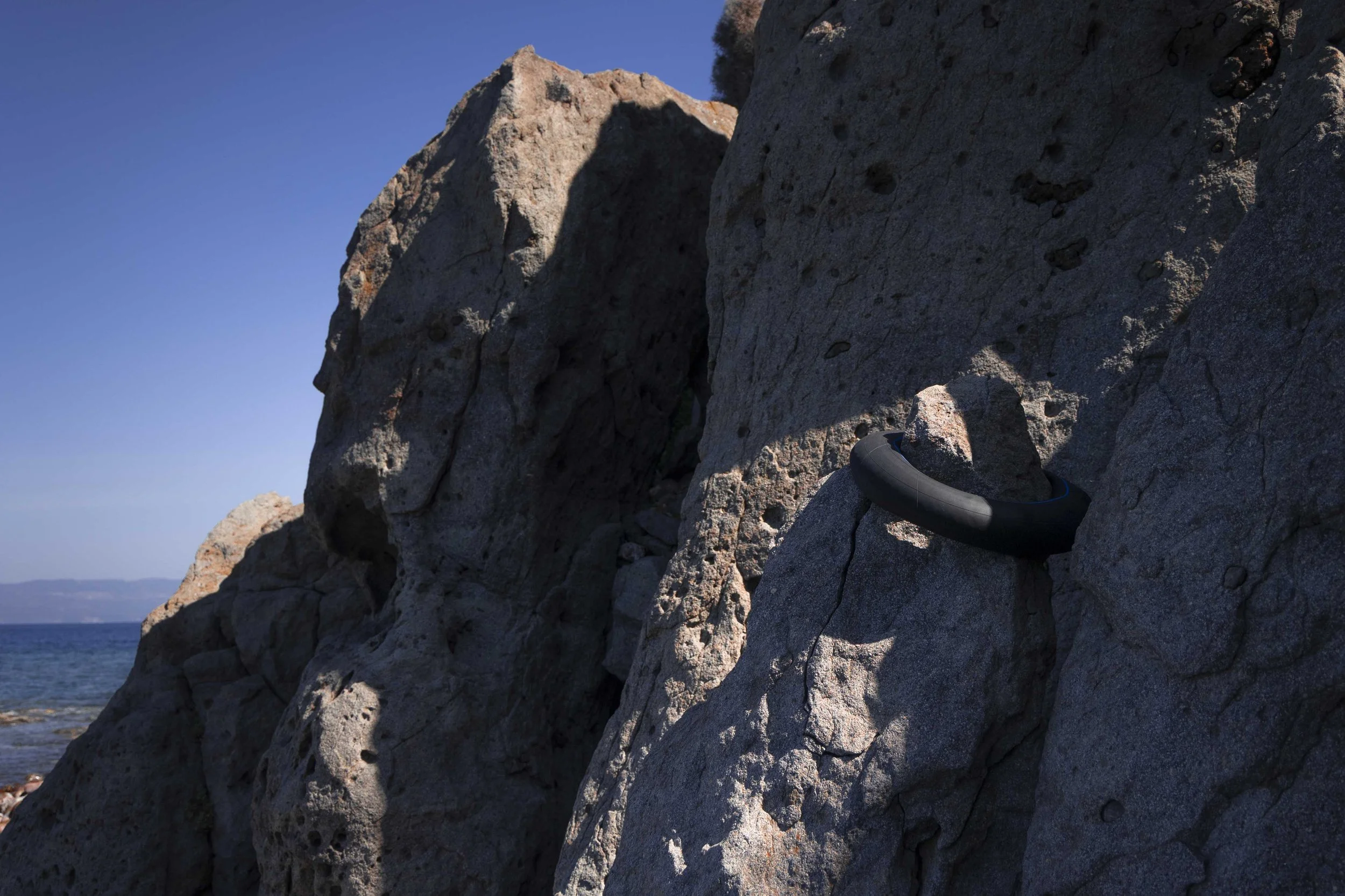
Over the previous years, rescue work had been persecuted and "sold" as an incentive for smuggling. In 2020, the Greek government extended its mistrust to all humanitarian work, accusing NGOs of "sucking" EU funding. A severe increase in requirements for the regularization of organizations was then implemented. With the criminalization of aid to migrants, violence directed at organizations, and imposed legal restrictions, many collectives ceased their activities. One example was Lighthouse Relief, which monitored the northern coast, then replaced by European authorities and their militarized equipment. Today, it is impossible to know how or when the lost objects arrived there: "they don't share any information," a local humanitarian worker told us.
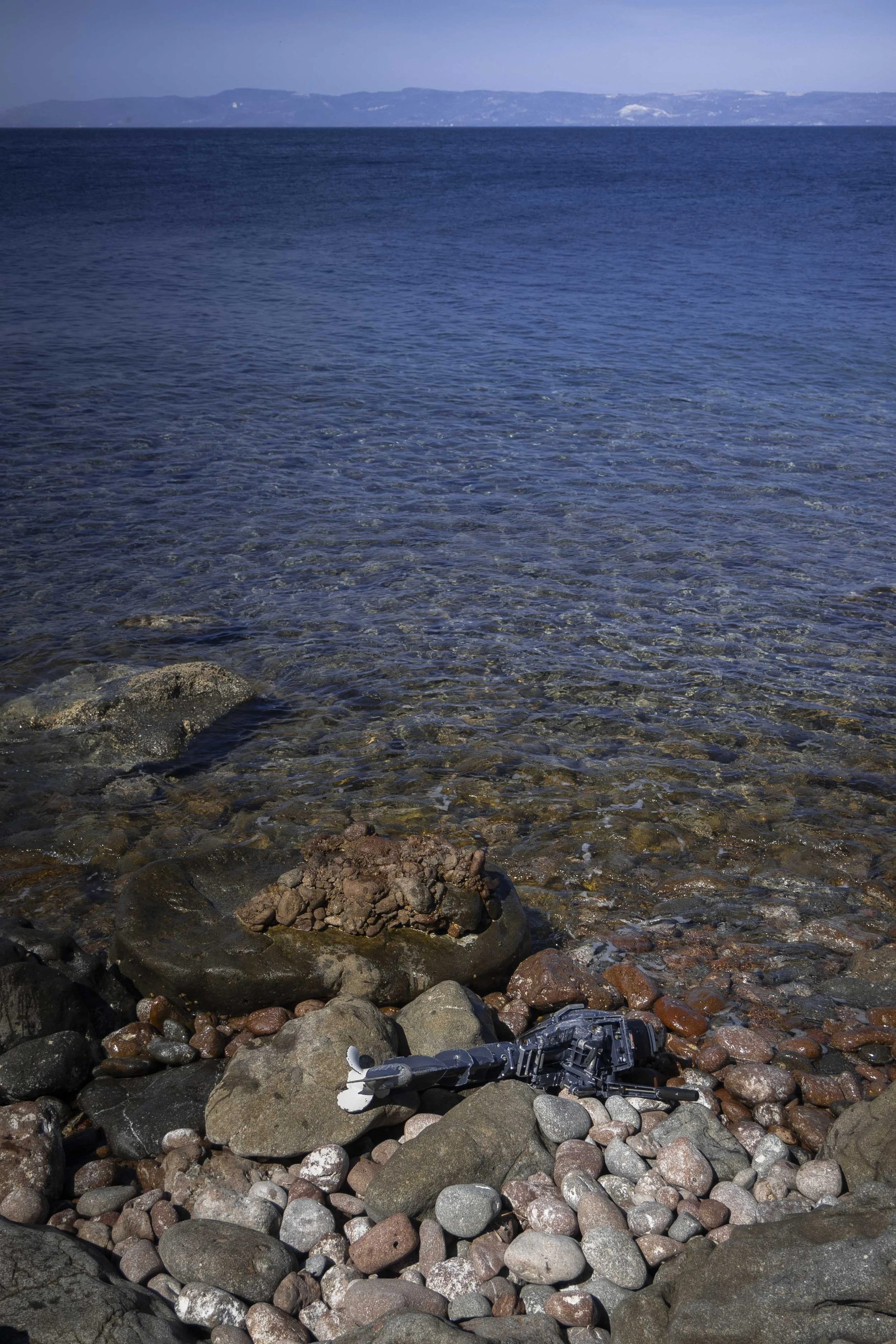
Over the previous years, rescue work had been persecuted and "sold" as an incentive for smuggling. In 2020, the Greek government extended its mistrust to all humanitarian work, accusing NGOs of "sucking" EU funding. A severe increase in requirements for the regularization of organizations was then implemented. With the criminalization of aid to migrants, violence directed at organizations, and imposed legal restrictions, many collectives ceased their activities. One example was Lighthouse Relief, which monitored the northern coast, then replaced by European authorities and their militarized equipment. Today, it is impossible to know how or when the lost objects arrived there: "they don't share any information," a local humanitarian worker told us.
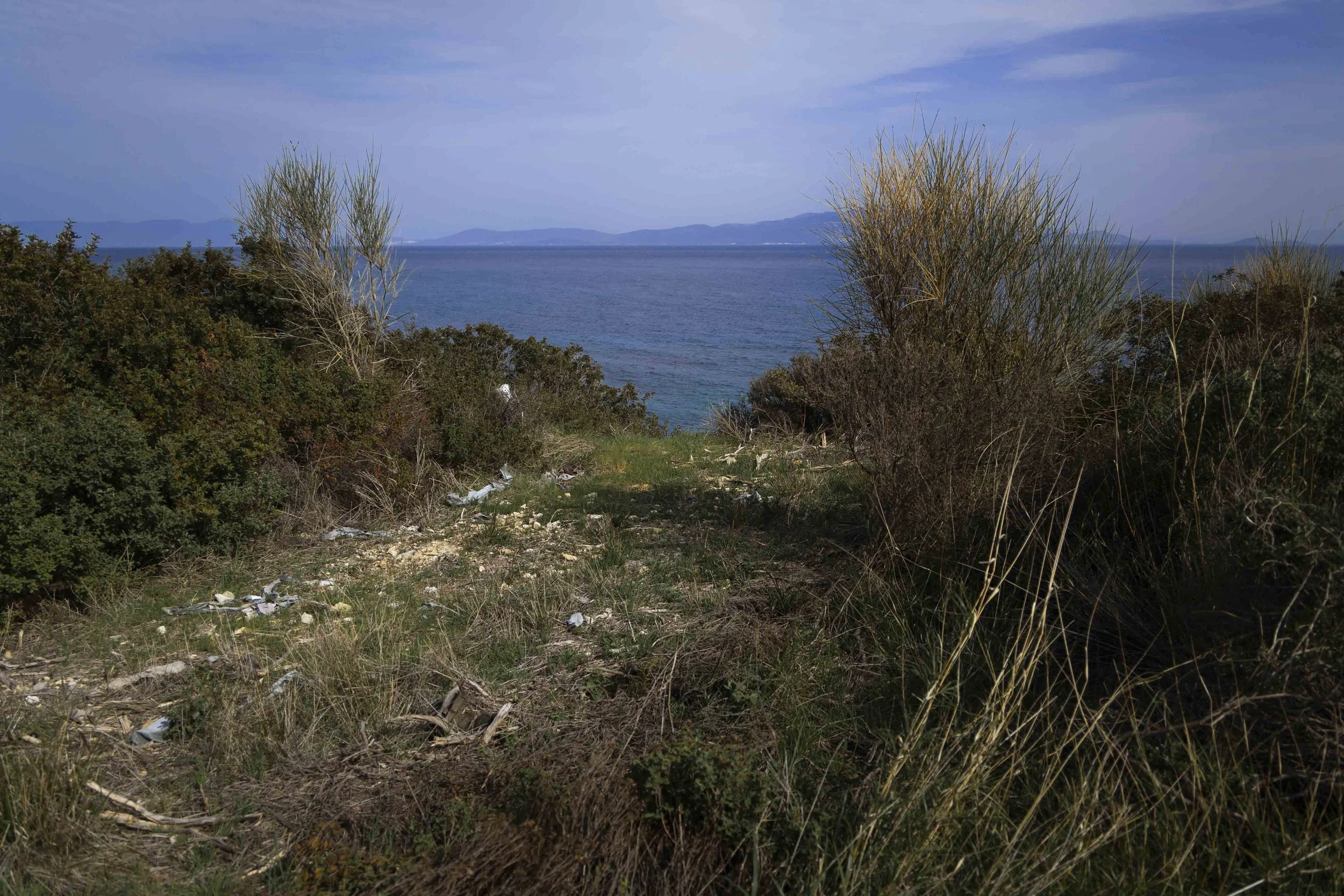
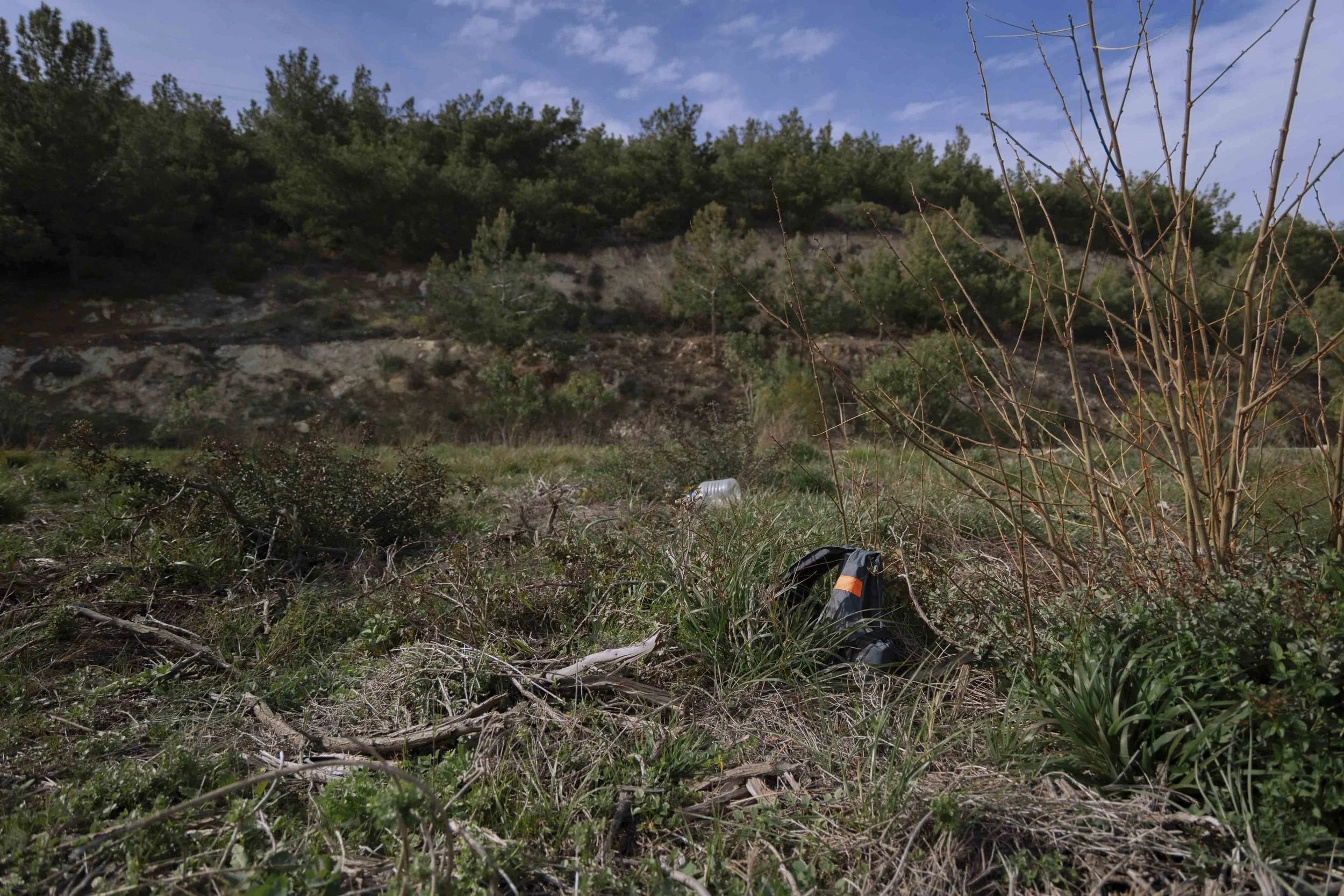
After 2020, pushback actions – a practice that violates national, european, and international legal norms – intensified. Migrants detained by authorities were not sent to reception centers to apply for asylum, but were left adrift at sea or deliberately thrown into the water. Between 2020 and 2023, these practices caused the deaths of at least 40 people between Lesbos and Turkey.
Today, avoiding beaches, landings in forest areas have become common, with migrants discreetly taking refuge at the top of steep ravines to avoid being returned to the sea, in stark contrast to the warm welcome from 2015.
2025: The time of Forgetting
Today, away from the media attention, Lesbos faces new challenges. After 10 years of existence, in September, the No Border Kitchen Lesvos collective announced the end of their activity: "Everything on the island is double the price now (...) and the support we’re receiving (human and economical) decreased as Lesbos is less in the spotlight." Being forgotten means less funding. In Kara Tepe, the largest facility for asylum seekers, "they don't even have money to buy us some nails," a humanitarian worker told us. Everything inside is provided by NGOs.
Forgetfulness takes also the form of a failure to preserve memory, visible in the abandoned structures in Moria, and a form of violence, reflected in the construction of a new detention superstructure for migrants in a remote area, far from public view and access, foreshadowing the future of migration policies in the EU.
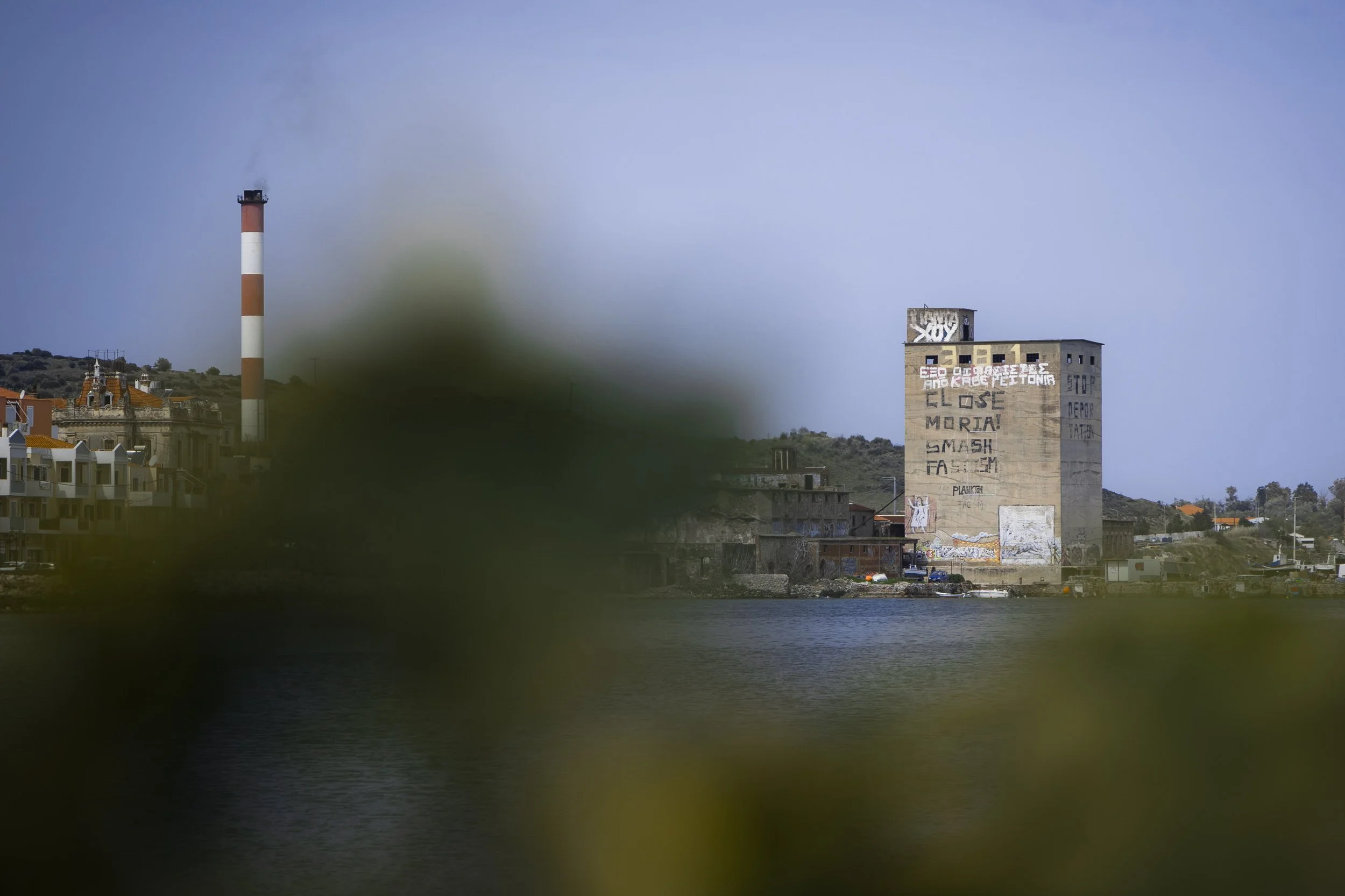
Remnants of memories from previous years scattered across the island: on the left, a building next to one of Mytilene's bays; on the right, the trailer of a humanitarian aid truck, abandoned next to various watercrafts.
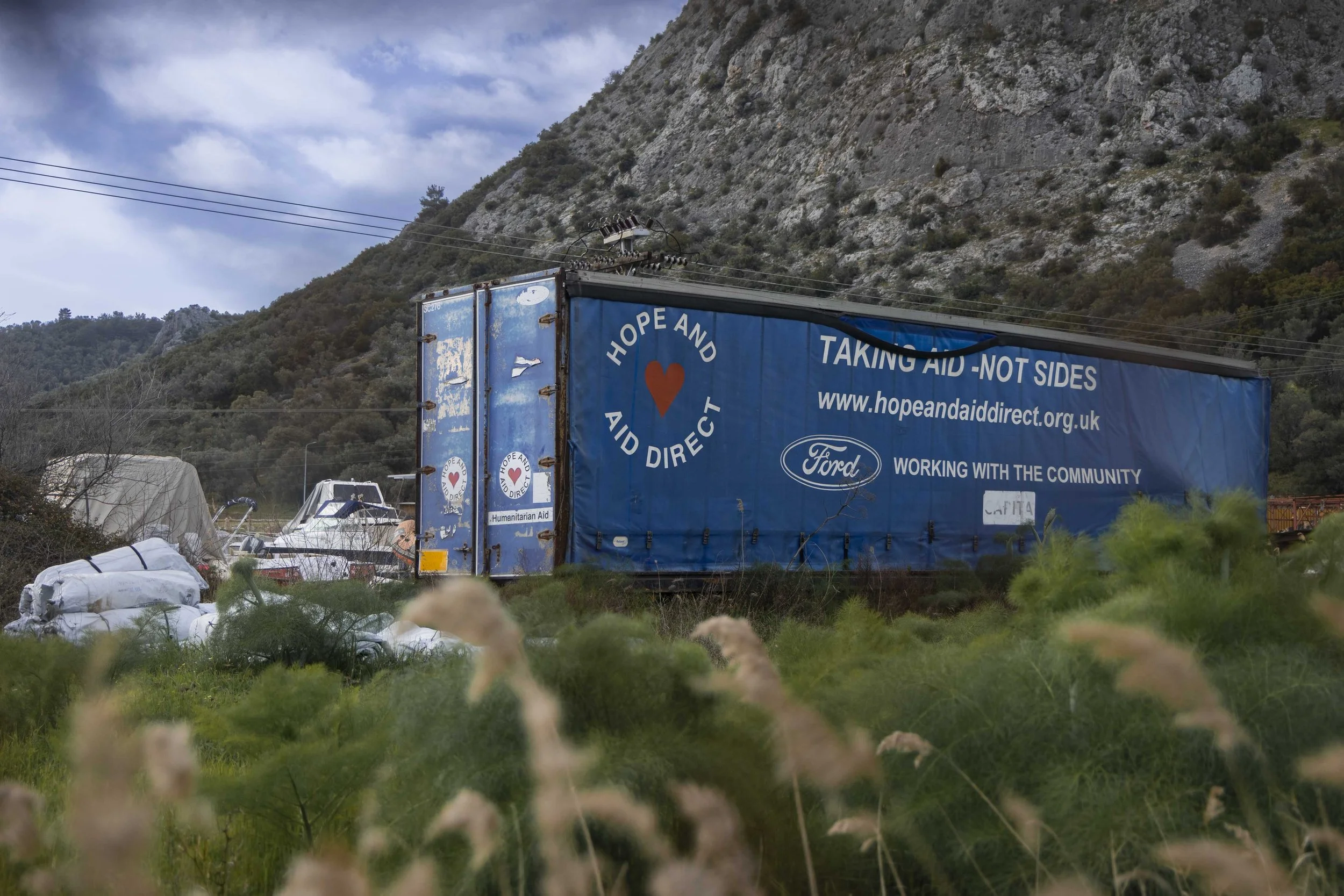
Remnants of memories from previous years scattered across the island: on the left, a building next to one of Mytilene's bays; on the right, the trailer of a humanitarian aid truck, abandoned next to various watercrafts.
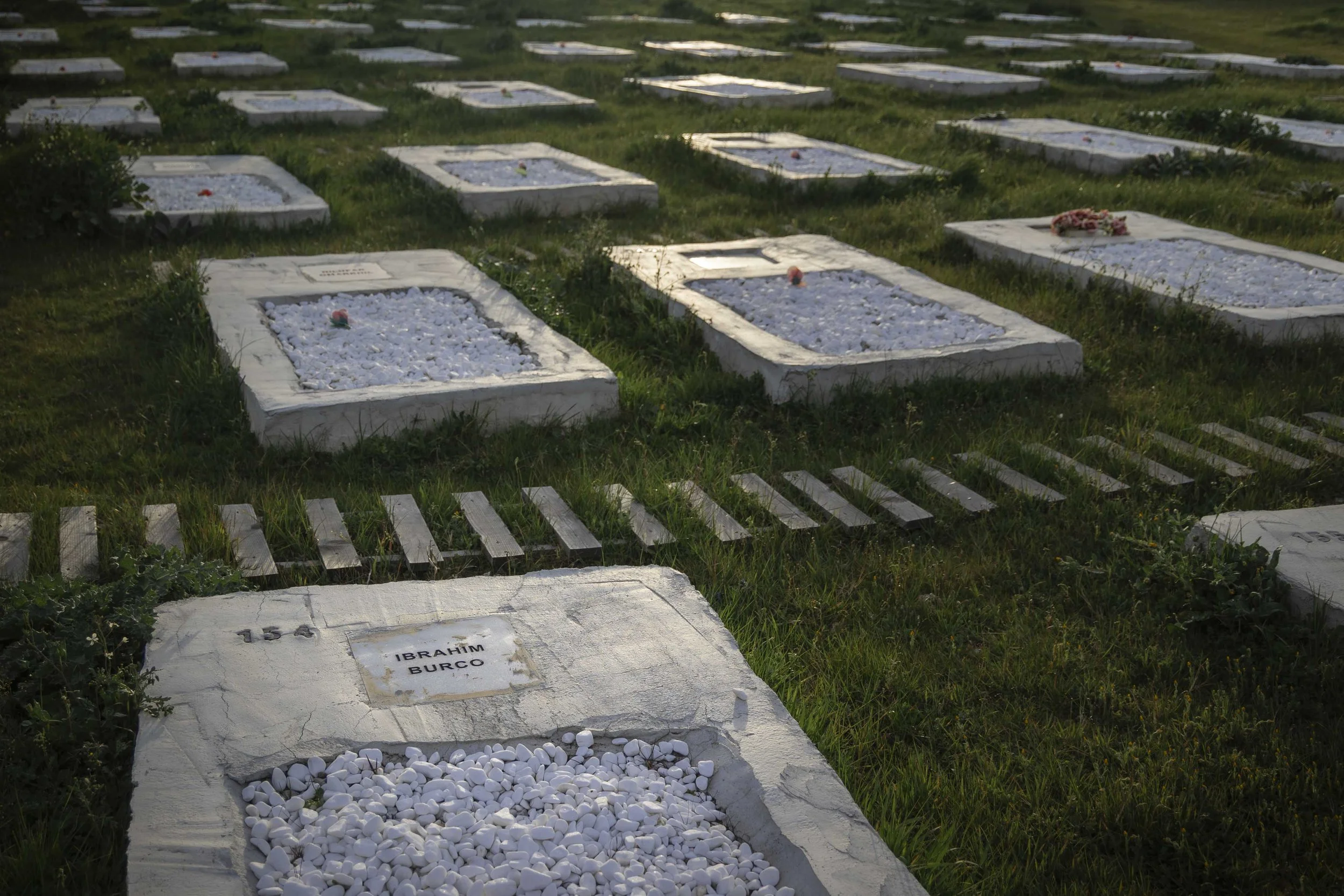
In Kato Tritos, an old cemetery abandoned after the 2020 fire, with lives lost at sea and in the hotspot, was recovered in 2023. The Memorial to Humanity project identified, beneath the rubbish and dense vegetation, 1.189 graves containing people of all ages. The project, which aims to combat forgetfulness, is also committed to identifying new and old victims and contacting their families. On the right, the grave of an unidentified woman found at sea – it was not clear how the grave had appeared there.
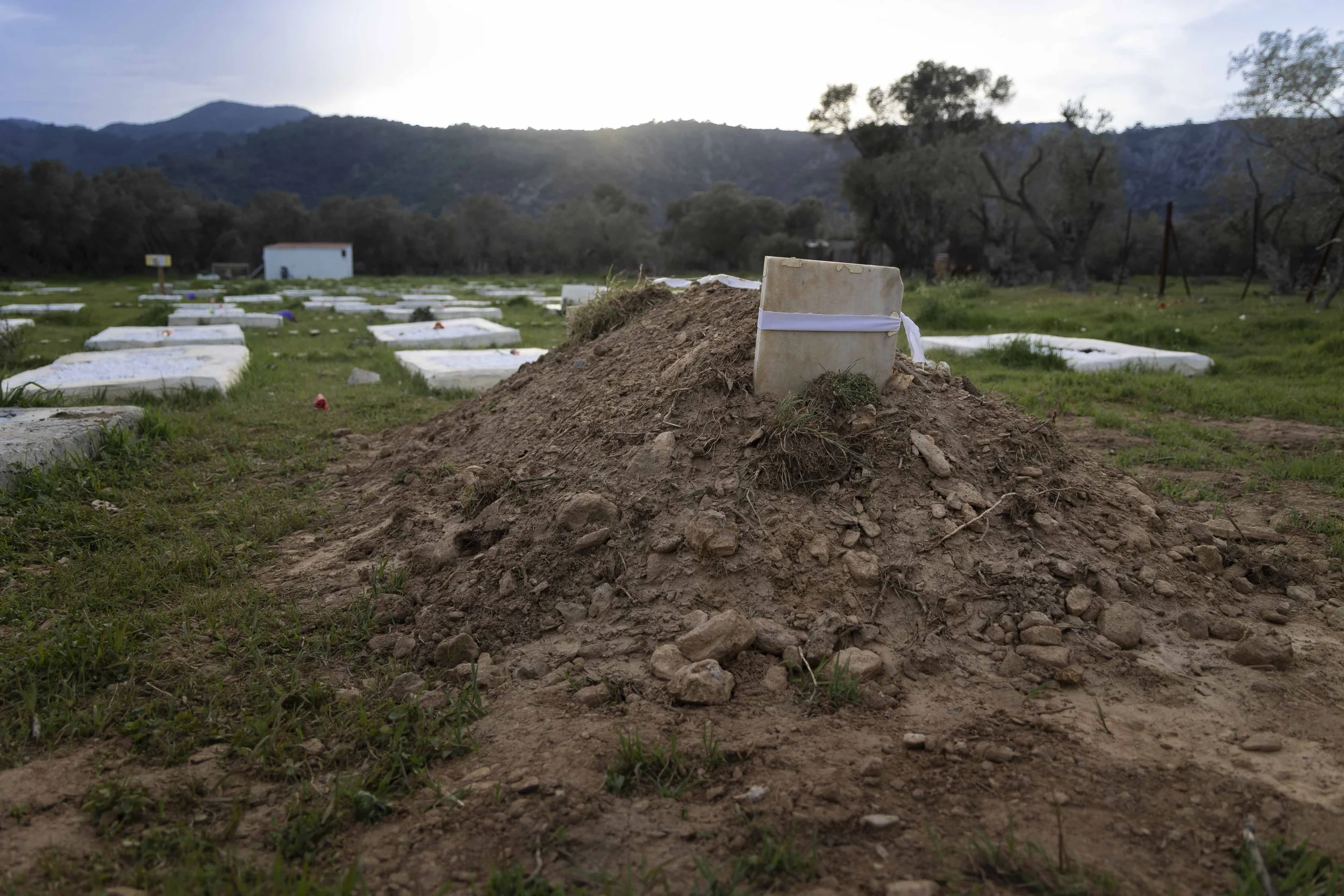
In Kato Tritos, an old cemetery abandoned after the 2020 fire, with lives lost at sea and in the hotspot, was recovered in 2023. The Memorial to Humanity project identified, beneath the rubbish and dense vegetation, 1.189 graves containing people of all ages. The project, which aims to combat forgetfulness, is also committed to identifying new and old victims and contacting their families. On the right, the grave of an unidentified woman found at sea – it was not clear how the grave had appeared there.
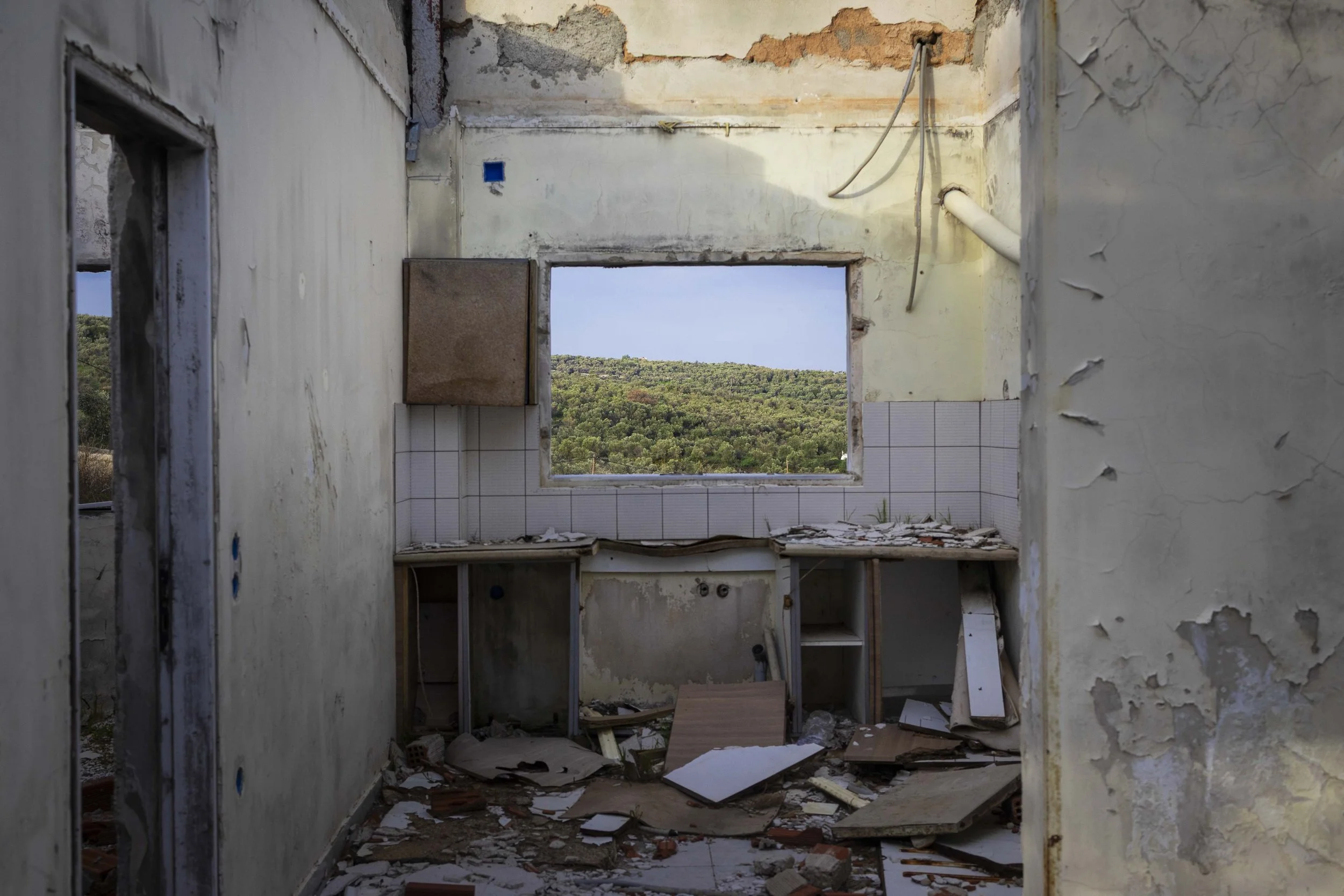
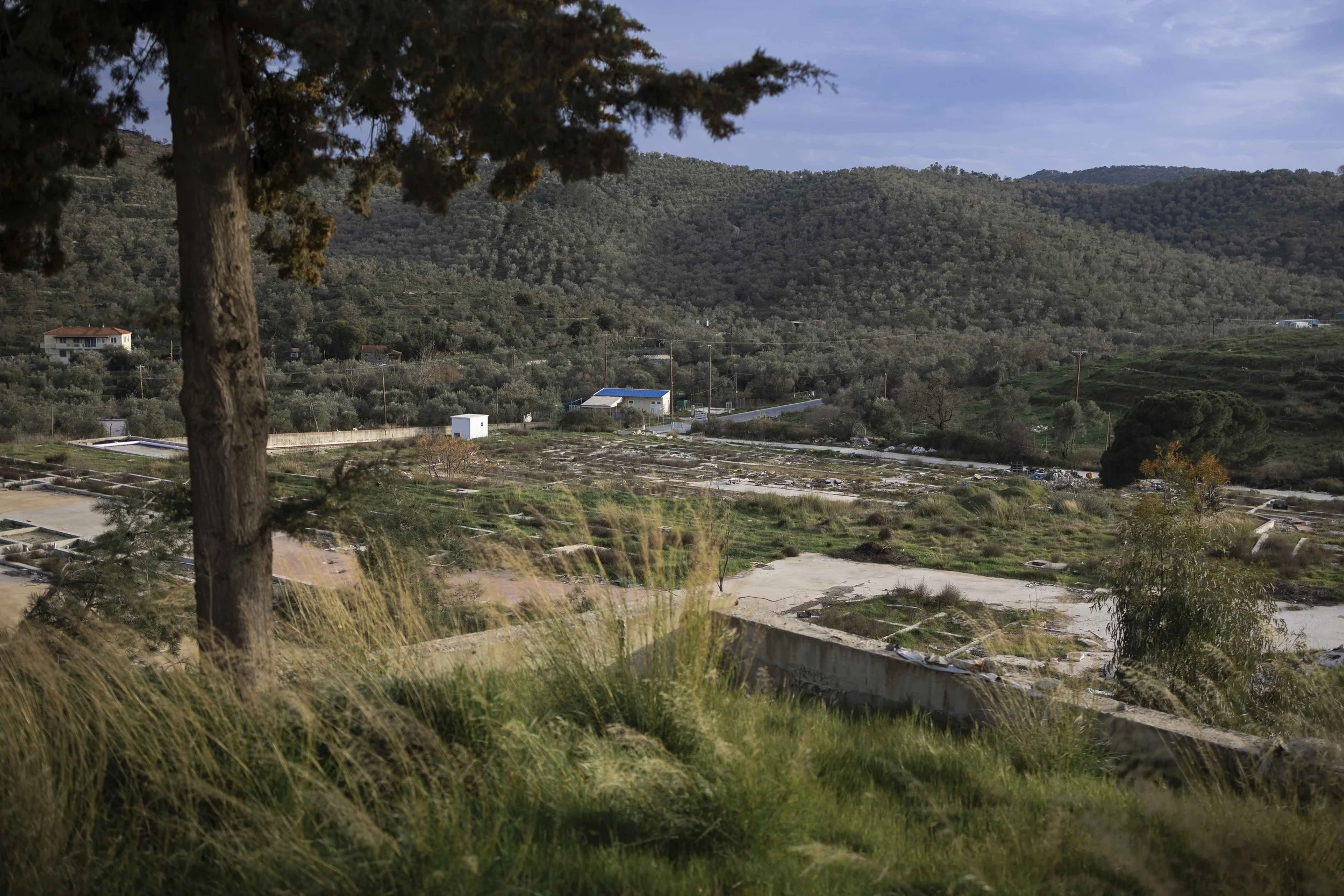
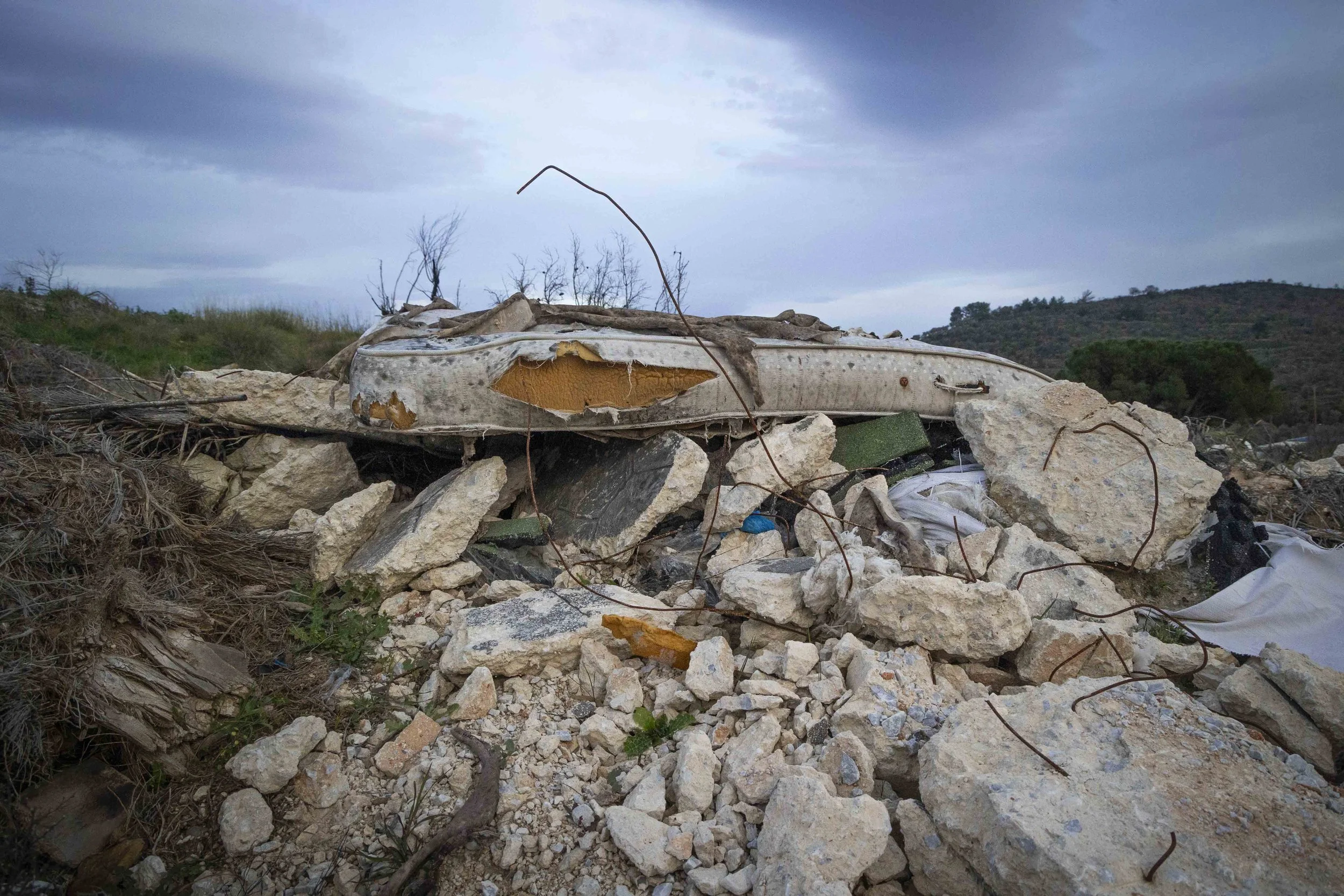
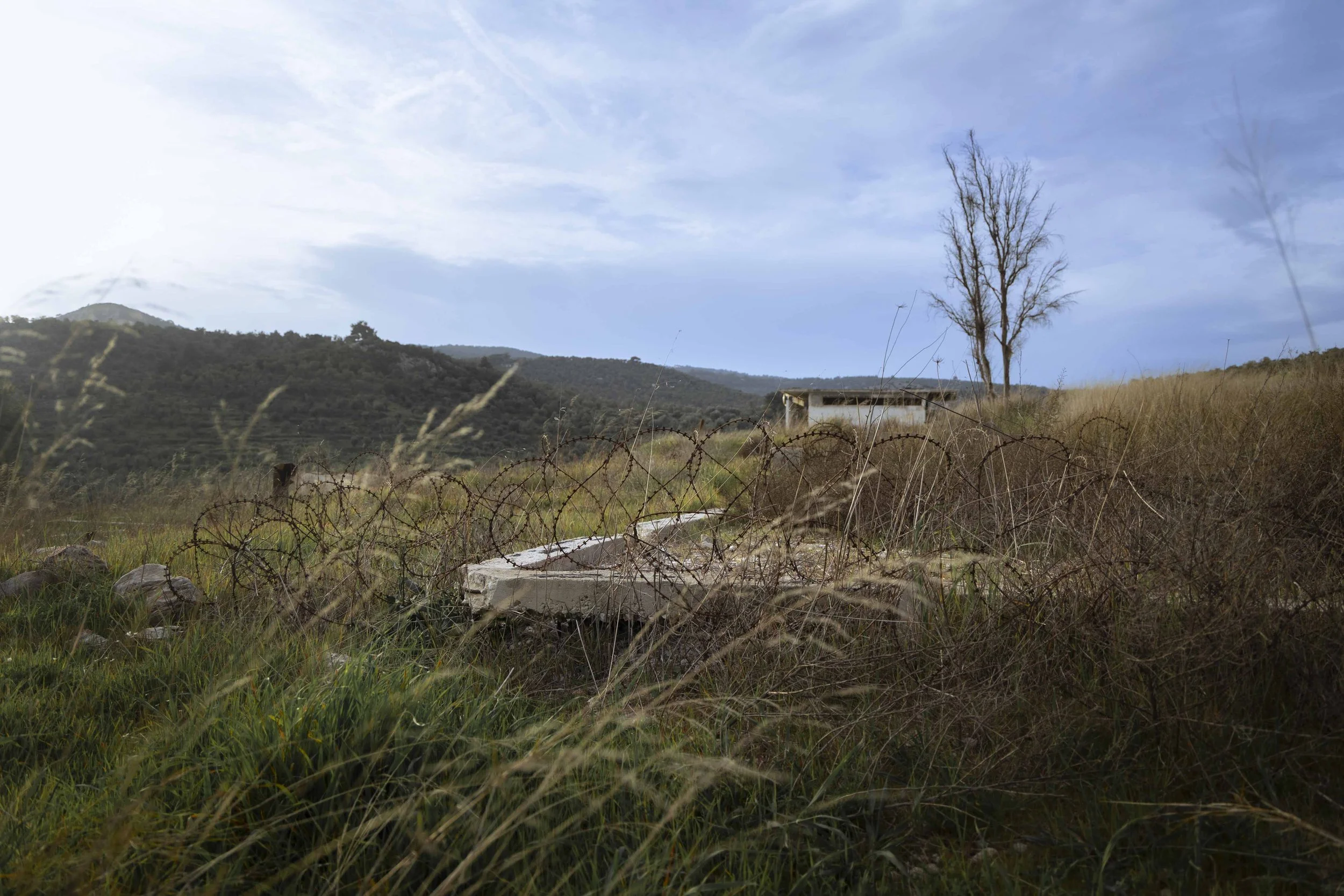
Once the "largest refugee camp in Europe," the area of the former Moria facilities is now an abandoned wasteland, serving as pasture for goats and a landfill for locals.
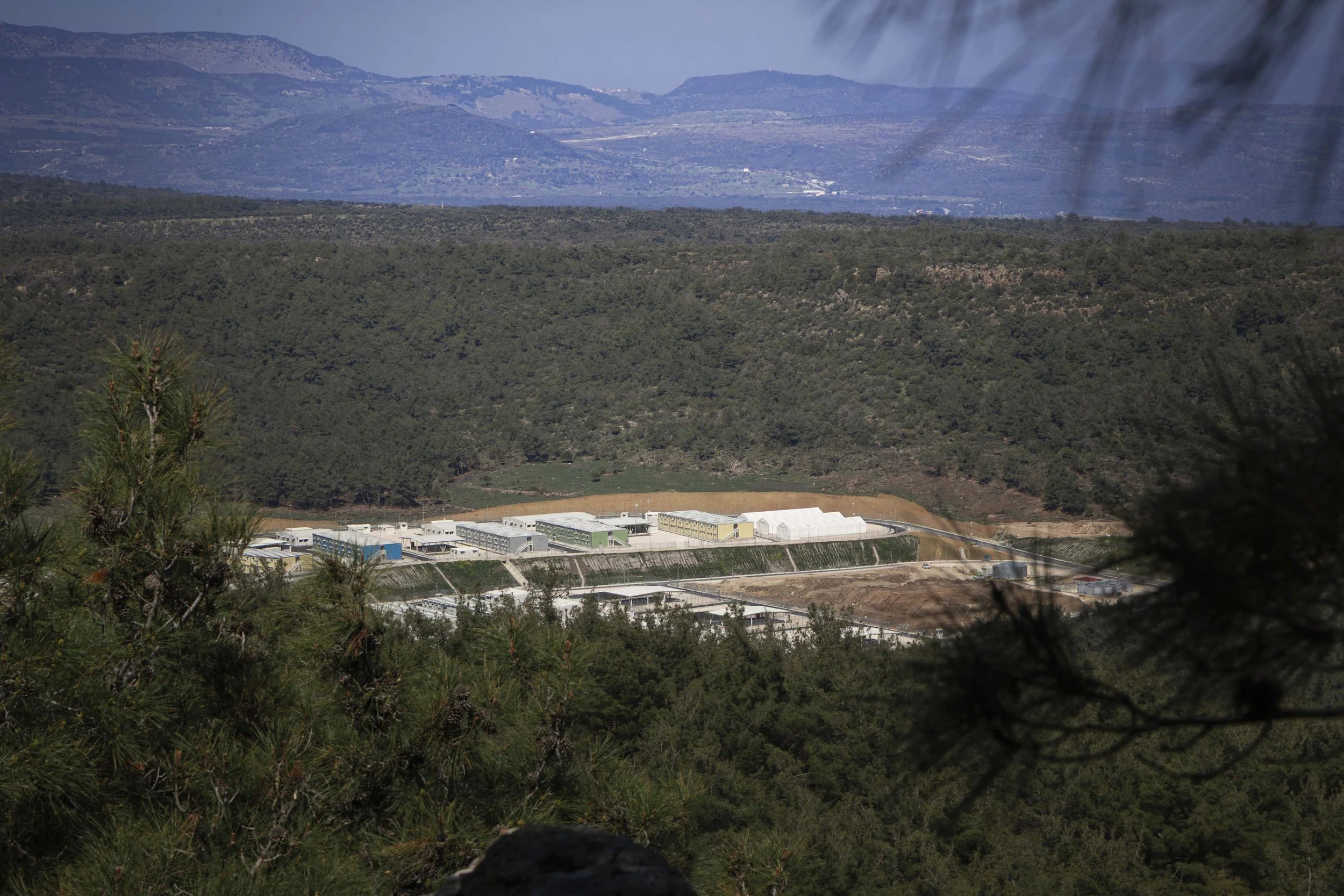
In 2025, a new detention center with a capacity for up to 10.000 people was expected to be completed. Planned for 2020, it was the target of strong boycott actions by locals. The chosen territory is still the main barrier to its opening – an area identified by the European Forest Fire Information System (EFFIS) as being at high risk of fire and lacking an evacuation plan.
Acknowledgments
To those who helped bring this project to life:
To Human Before Borders members, Boat Refugee Foundation, Fenix, Memorial to Humanity
&
Ana Catarina Alves, António Caeiro Marques, Bruno Portela & CC11, Carolina Almeida, Catarina Cesário, Christos Nikolaidis, Duarte Barreiros, Fabiana de Lima Faria, Fabíola Velasquez, Fayad Mulla, Gabriela Carvalho, Hugo Evangelista, Hugo Monteiro, Irina Pampim, Joana Vieira, João Madeira, José Faria, José Soeiro, Lucas Lima, Maaike Vledder, Manuel Afonso, Maria Kokkali & Safe Passage Bags, Paulo Vieira, Ricardo Coelho, Ricardo Lopes.